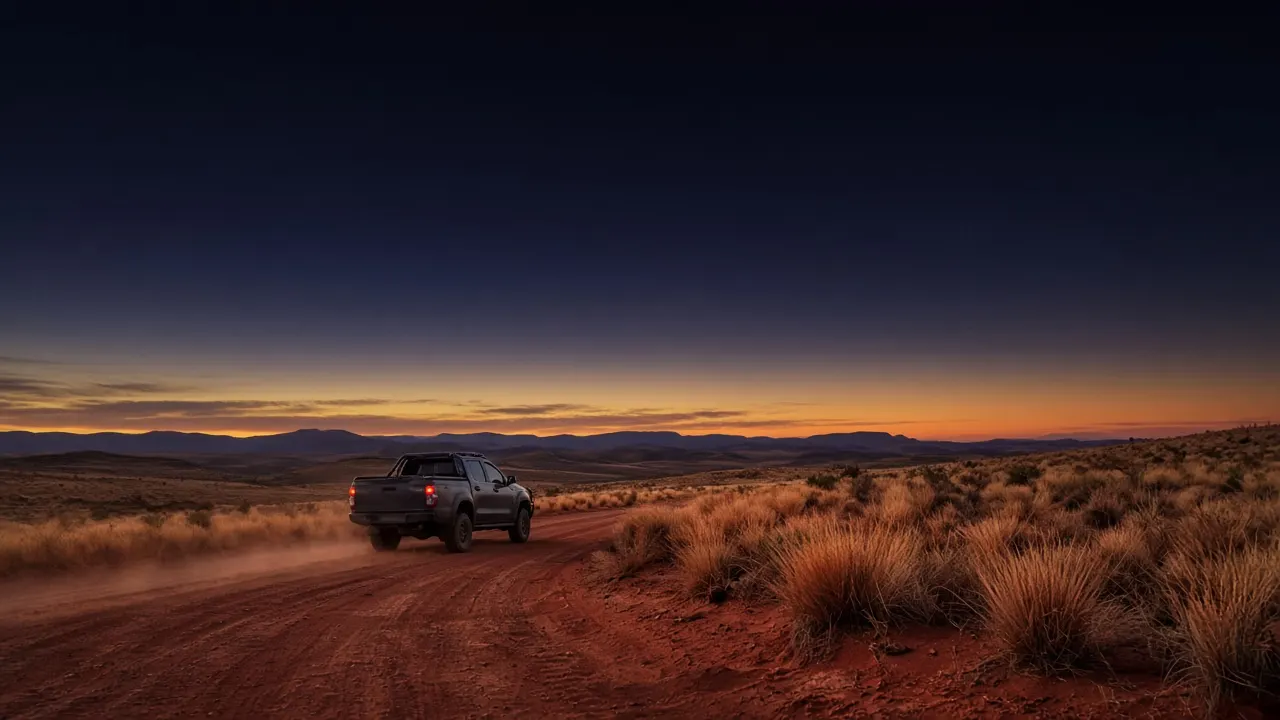
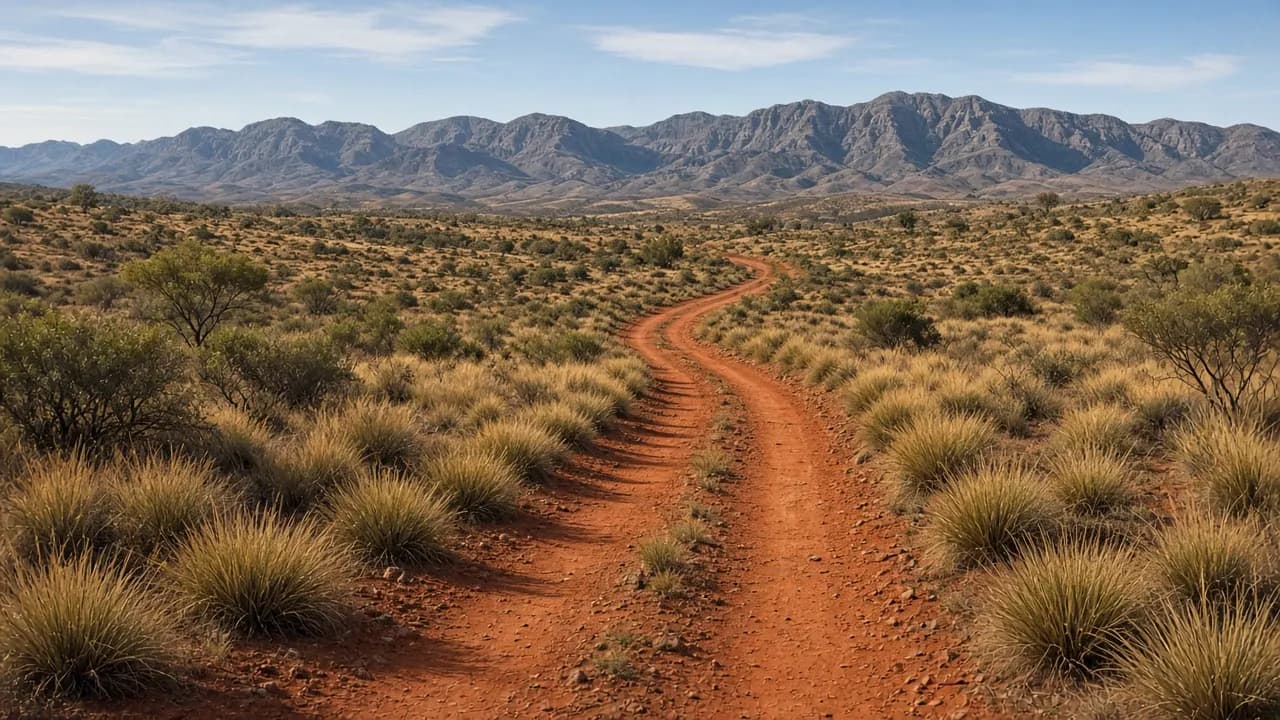
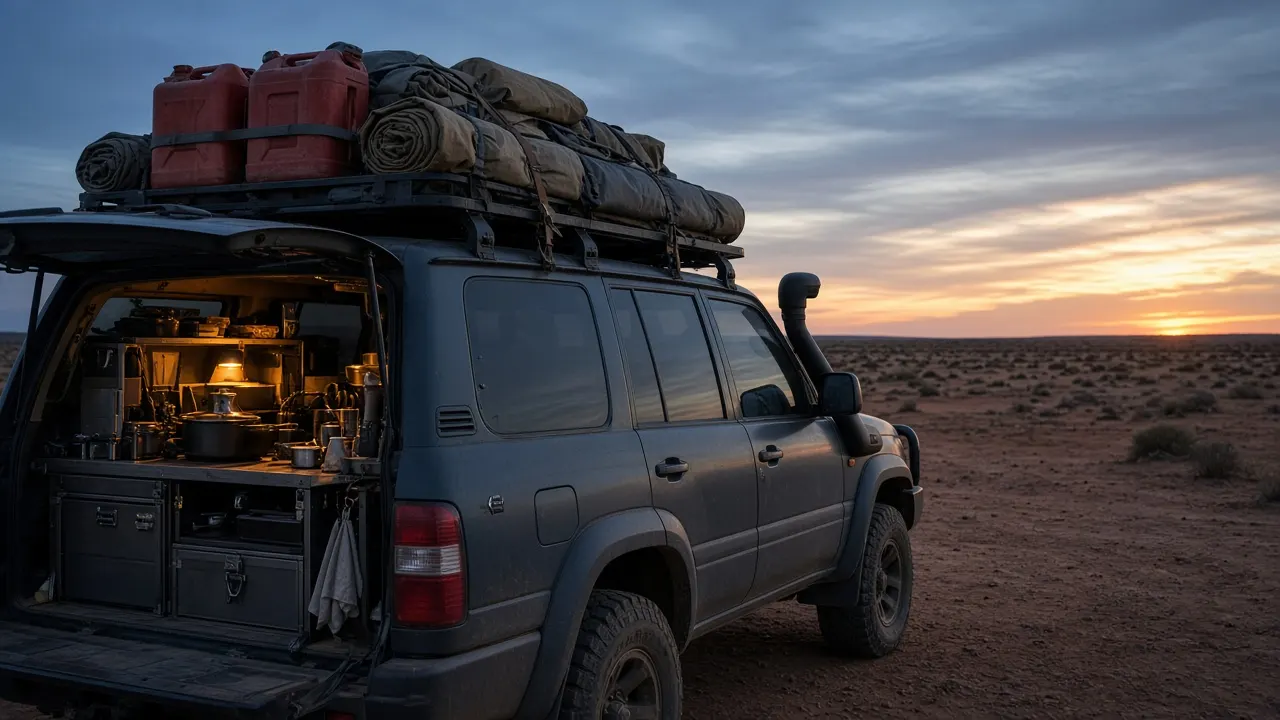
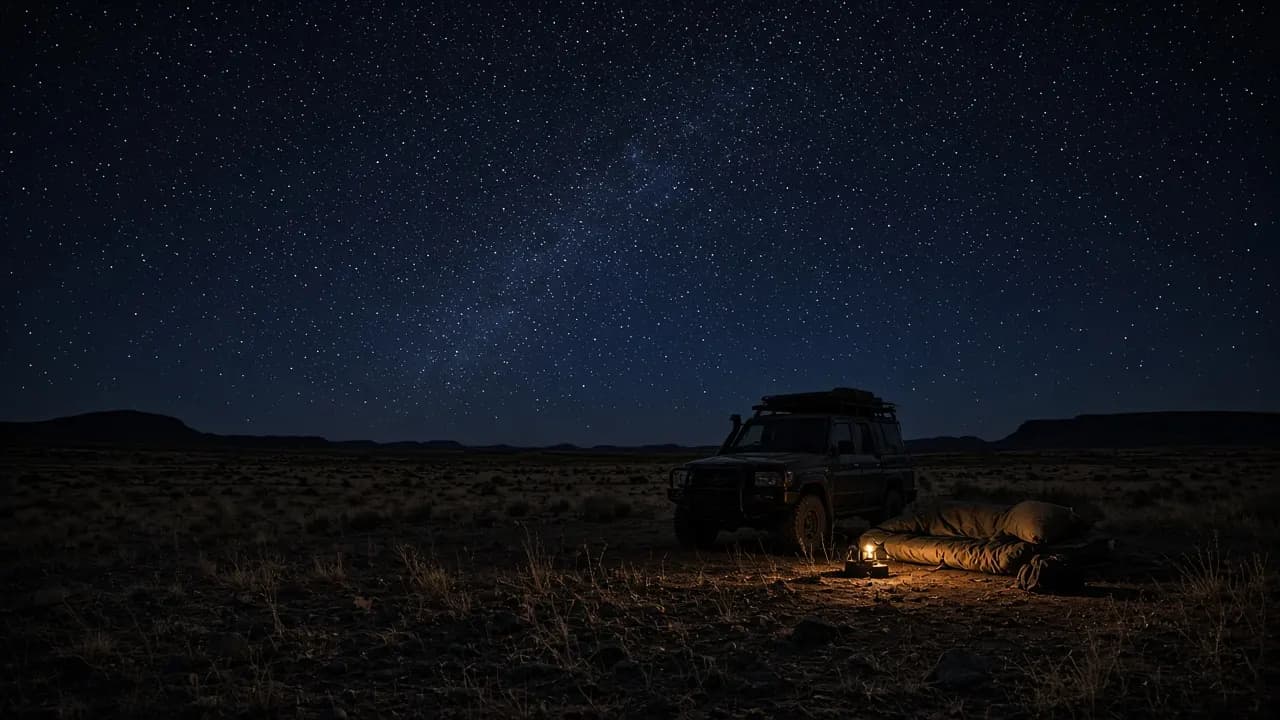
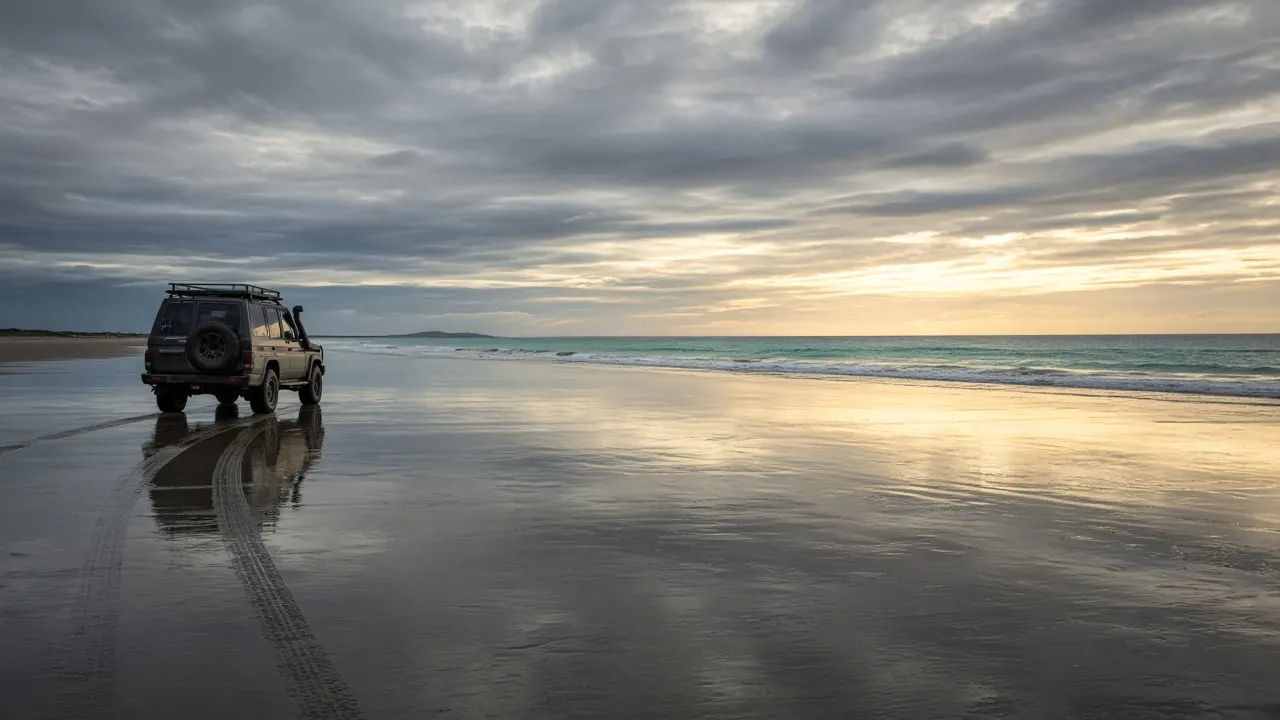

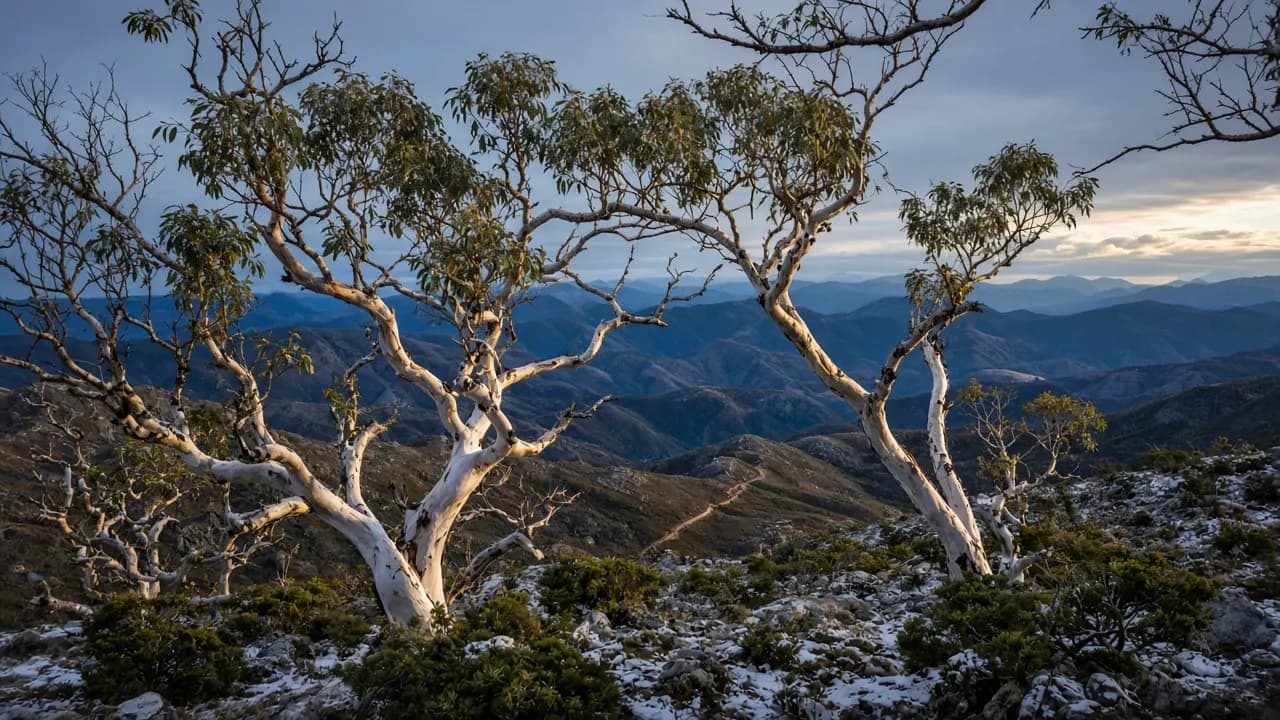
A 4WD adventure in Australia is rarely a single road. It is a sequence of tenures — national park, state forest, Aboriginal land, pastoral lease, local-government beach — stitched together by a vehicle that has to stay mechanically honest in heat, salt, corrugations and silence. This site is written for people who want that sequence to hold: travellers planning a first remote run, club members refreshing a habit, and anyone who has watched a social-media clip and wondered what the clip left out.
The useful question is not “which track is the best”. Rankings collapse the moment a river rises or a ranger closes a seasonal gate. The useful question is: what kind of country are you entering, who manages it, and what does that country do to a vehicle and a crew? Beach sand punishes tyre pressure and tides. Desert dunes punish under-preparation and late-season heat. High Country tracks punish people who treat winter as a rumour. Cape York punishes anything that cannot be repaired with what you brought.
Start with the landscape, not the highlight reel
Iconic names are still useful as a map of families of travel. Cape York is a peninsula of creek crossings, corrugated roads and Aboriginal land permissions layered over Queensland Parks and Wildlife Service reserves. The Gibb River Road is Kimberley cattle-country and park access managed through Western Australia’s Department of Biodiversity, Conservation and Attractions, with side trips that have their own booking rules. The Canning Stock Route is a long, multi-tenure desert line that is not a single “park drive”. The Simpson sits across South Australian, Queensland and Northern Territory desert parks. K’gari is an island of beach travel and rainforest interior under Queensland Parks and Wildlife Service. The Victorian High Country is alpine and sub-alpine forest where Parks Victoria and the Department of Energy, Environment and Climate Action close roads for a reason.
Those names appear throughout this guide because they are the routes people actually ask about. They are not a scoreboard. A quiet forest track after rain can demand more judgment than a famous dune.
What “prepared” actually means
Preparation is not a shopping list that grows until the canopy looks busy. It is a set of decisions made in order.
First, the vehicle has to leave home able to carry its own faults: cooling that still works at walking pace, charging that survives a fridge and a winch, tyres that match the load, and recovery points that are rated — not decorative. Second, consumables have to outlast the longest plausible delay: water, fuel, food, and the medicines you cannot improvise. Third, someone who is not on the trip has to know the plan and the time at which silence becomes a problem. Fourth, communications have to work when the mobile network does not — a registered personal locator beacon for distress, and a satellite device if you want a conversation rather than a rescue.
The trip preparation and remote-area safety guides treat those as crafts, not slogans.
Recovery is a skill, not a personality
Most remote incidents that involve a vehicle start as something small: a soft patch, a rutted climb, a tide that came in while someone took a photograph. Recovery gear is how you keep that moment from becoming an overnight. It is also how people get hurt when straps, hitch balls and unrated bumper holes are asked to do work they were never made for.
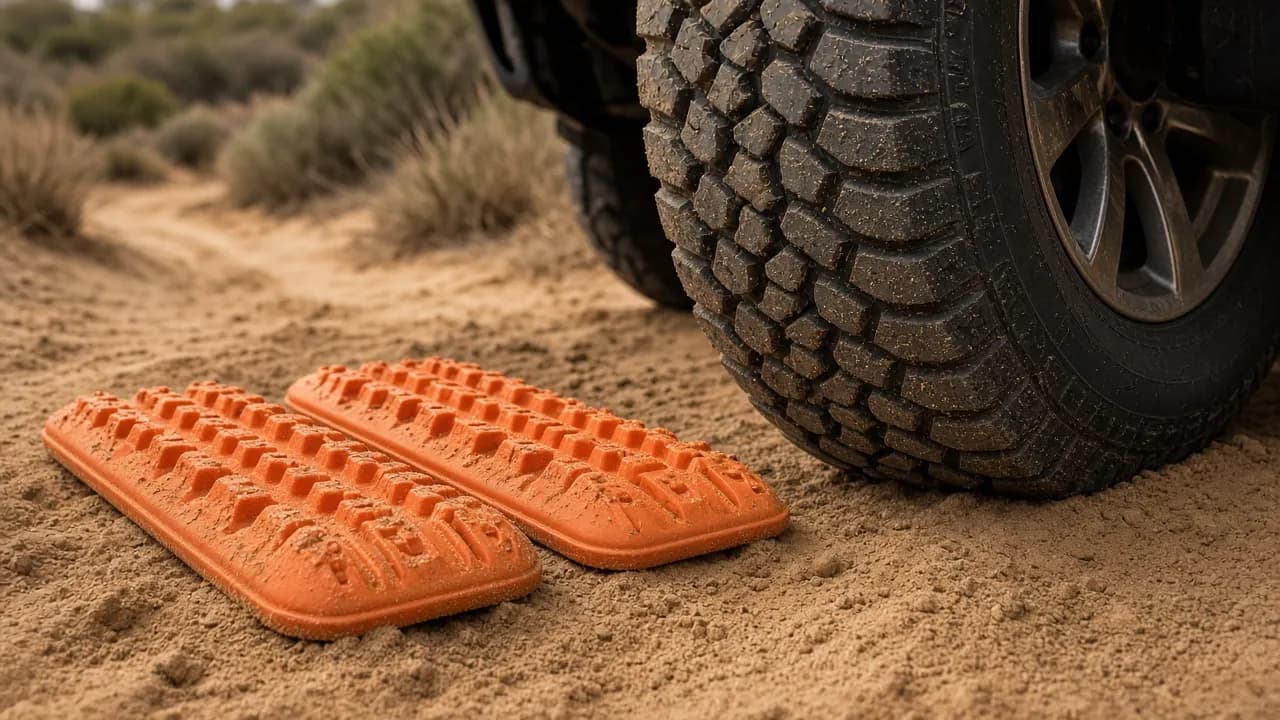
If you remember one line from the recovery basics guide, make it this: use rated points, keep people out of the snap-back line, and stop when the vehicle or the country is telling you the line is wrong. A winch is optional for many trips. A shovel, boards and the humility to air down are not.
Authorities, not anecdotes
Every landscape page on this site names the managers you should actually read.
- Parks Australia for Commonwealth reserves.
- Queensland Parks and Wildlife Service for much of Cape York, K’gari and Queensland’s desert parks.
- Parks Victoria and DEECA for High Country roads and seasonal closures.
- National Parks and Wildlife Service South Australia and counterpart agencies in the Northern Territory and Queensland for Simpson Desert parks.
- Department of Biodiversity, Conservation and Attractions in Western Australia for Kimberley parks and many desert reserves.
- Land councils and prescribed body corporates wherever a track crosses Aboriginal land.
- Local councils for many beach-driving permits that sit outside national parks.
We do not reprint their fee tables or their closure calendars. Those documents change, and a copied number on a field guide becomes a liability the moment it is stale. We tell you which desk to ask, and what question to ask them.
How the guides are arranged
Read iconic 4WD tracks if you are still choosing a direction. Read beach driving, desert crossings or High Country if the landscape is already decided. Read preparation and recovery before you spend another evening arguing about accessories. Read about if you want the editorial rules that keep this site from turning into a brochure.
If you have a correction that comes from a current park notice — not from a vibe — use contact. The job of this desk is to stay useful when the country changes.
A last orientation, because it saves grief: Australia’s remote tracks are not a theme park with a single ticket office. They are working landscapes with neighbours, Traditional Owners, fire authorities and rangers who will close a road to protect the place you came to see. Travel as a guest who intends to leave the gate the way they found it, the track unbraided, and the next crew with the same chance you had.
Questions people ask first
Each answer leads with the useful part, then the caveats that belong with it.
- What are Australia's most iconic 4WD tracks?
- The routes people plan years around are Cape York and the Old Telegraph Track country in Queensland, the Gibb River Road in the Kimberley, the Canning Stock Route, the Simpson Desert parks, K’gari beach travel, and the Victorian High Country. Each sits on different tenures — ask the managing park service and any land council before treating a name on a map as an open road.
- How do I prepare a 4WD for a remote trip?
- Inspect the vehicle as a system (cooling, charging, tyres, recovery points, fuel and water), plan consumables with reserves, and file trip intentions with someone who will notice if you do not call. The trip-preparation guide walks through that sequence.
- What recovery gear should I carry?
- Carry rated recovery points, a dampened snatch strap or equivalent kinetic device used only as designed, recovery boards, a shovel, and — if you winch — a rated winch, gloves and a damper. How that kit is used matters more than how much of it you own.
- What communications should I carry in remote country?
- A registered 406 MHz personal locator beacon remains the distress device Australian search authorities are set up to hear. Add a satellite messenger or satellite phone for two-way updates, and treat mobile coverage as a bonus, not a plan.