4x4adventures.com.au is a small editorial project about a large country. The useful 4WD knowledge in Australia is scattered across park-service notices, land-council permit pages, and the quiet habits of people who have already had a bad afternoon and would like you to skip it. This site gathers the habits and points at the notices.
It is not a newspaper. It will not chase a weekend incident for traffic. It is not a forum. It will not host an argument about whether a particular crossing was “easy last year”. Those formats exist elsewhere and they do a different job. The job here is orientation: what kind of country you are entering, what the vehicle and the crew must be ready to do, and which public desk is allowed to say no.
The angle
Plenty of 4WD coverage treats the vehicle as the story — new models, new accessories, new opinions. This guide treats the track as the story, and the vehicle as the tool that has to stay honest until the last gate. That is why the home page asks you to pick a landscape first, and why the preparation and recovery chapters refuse to turn into shopping.
It is also why we will not rank tracks. A ranking is entertainment. A tenure stack and a seasonal notice are information. Cape York, the Canning, the Simpson, the Gibb, K’gari and the High Country appear here because people ask for them by name, not because we have arranged them on a podium.
How a page is written
Each guide starts with the question a careful traveller actually asks, answers it in the first breath, and then slows down. FAQs on those pages do the same. If you only read the first sentence, you should still leave with something you can act on: which authority, which device, which habit.
Facts that can go stale — fees, opening dates, fire restrictions, track-by-track closure tables — are left with the people who change them. We describe the system (Parks Victoria’s seasonal list, a three-jurisdiction Simpson crossing, a council beach permit) and we name the system. We do not freeze last Tuesday’s PDF into a paragraph that will still be here in a year.
Where a public agency has a stable, plain-language rule — for example Parks Victoria’s description of the usual High Country closure window — we may restate that rule and still send you to the current list. Restating a system is not the same as impersonating a ranger.
What we will not do
We will not invent a price. We will not invent a permit fee, a ferry cost, or a “typical” spend. We will not invent an operator, a tour, a ranking, an award, an event calendar, or a quotation from a person who did not stand here and say it.
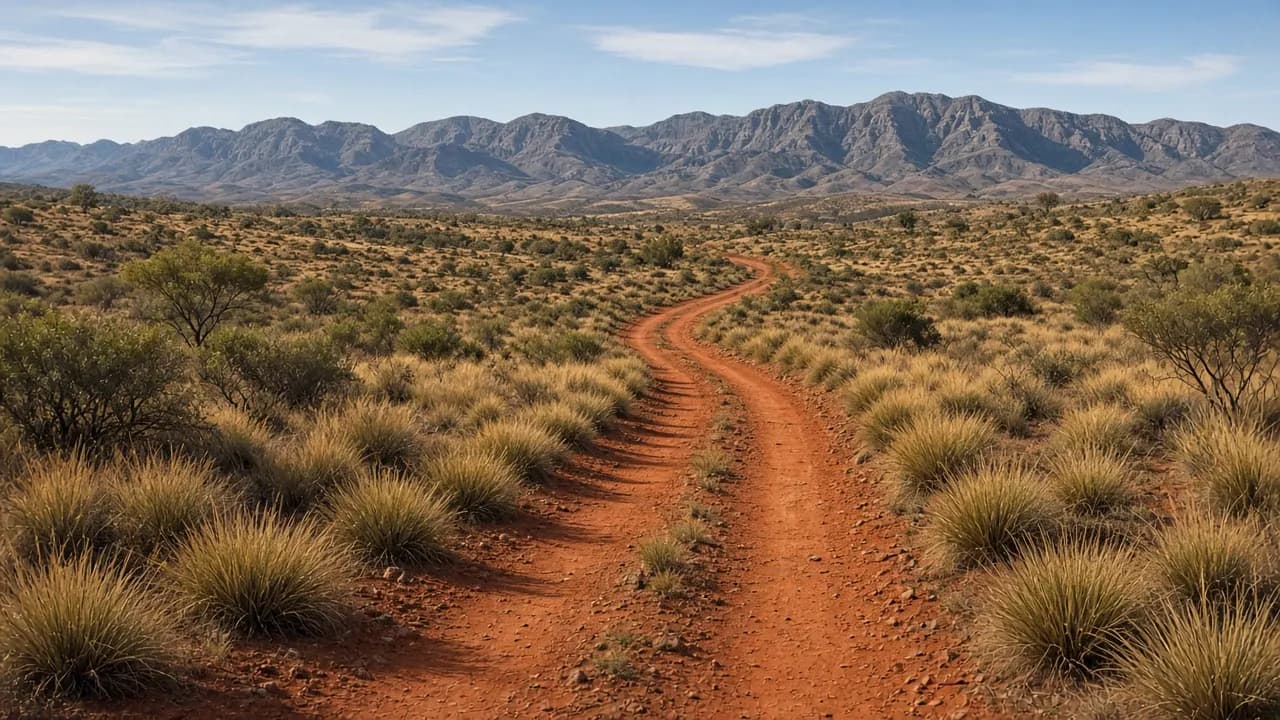
We will not publish a photograph as if it were a condition report. Country changes.
We will not pretend this guide replaces training, mechanical skill, or local advice on the day. A practical recovery session, a current park notice, and a crew that is allowed to say no will always outrank a well-structured article.
Who is speaking
The site is written in a newsroom-of-one voice on purpose. There is no chorus of correspondents and no implied club behind the sentences. If a page is wrong, the contact form is how you reach the desk that can fix it. Bring a source if you can — a park-service URL, a land-council notice, an AMSA page. Those corrections are the ones that stick.
If you need to know how messages and any server logs are handled, read privacy. If you need the tracks themselves, start at iconic 4WD tracks or at the landscape that matches the week you actually have.
Australian 4WD travel is still one of the generous ways to move through this continent, provided it stays a visit. This field guide is for people who want the visit to be competent: the right permit in the folder, the right pressure in the tyres, and the right person at home who knows when you meant to be back.
Questions people ask first
Each answer leads with the useful part, then the caveats that belong with it.
- Is this a news site or a forum?
- Neither. It is a field guide. There is no live news cycle and no public discussion board — the pages are written to stay useful between seasons.
- Do you take bookings or recommend operators?
- No. When a trip needs a commercial service, choose one yourself from current, official and local information. This desk does not run a directory.
- Can I suggest a correction?
- Yes. Use the contact page and point to the park notice or agency page that changed. Corrections that come with a source help everyone.
Keep reading
- contact
- privacy
- Iconic 4WD tracks
Cape York, the Canning, the Simpson, the Gibb, K’gari and the High Country — what makes each route distinct, and which authority to ask before you go.